Key takeaways
- When process replaces purpose.
- How performance reviews become ritual without function - metrics without validity, improvements without change.
- When process replaces purpose.
The Ritual Without Function
You've seen this email before. The quarterly performance review survey. Or maybe it's the annual engagement check-in. The title changes, the template doesn't.
A few weeks later, the "results" land in your inbox. Colorful charts. Confident conclusions. And a promise: "We hear you. We're taking action."
But here's the thing - the "actions" are always the same. "We'll update the guides." "We'll remind managers." "We'll explain the process better." It's not improvement. It's repackaging
The system exists. The motions happen. But nothing actually changes. Goals remain unclear. Feedback remains vague. Promotions remain mysterious. And next quarter, you'll get the same email again.
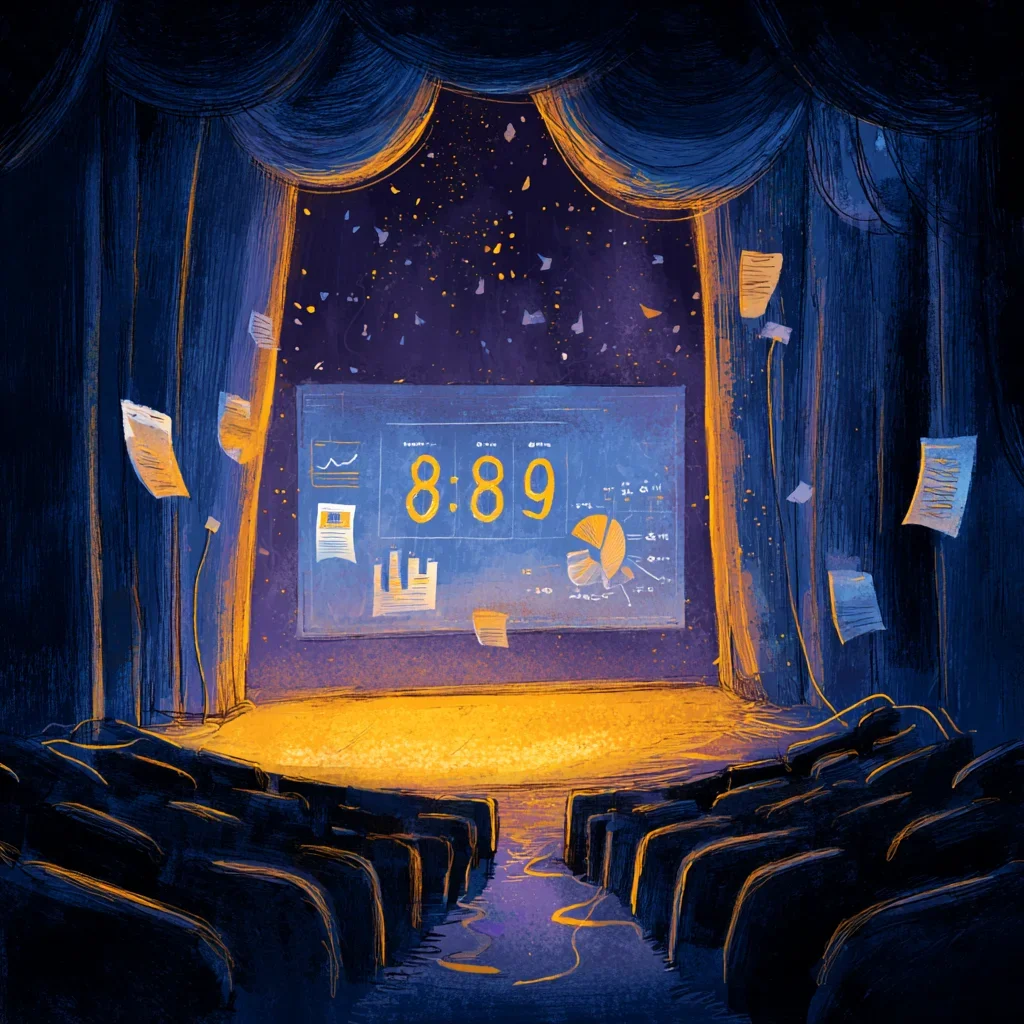
That's Performance Review Theatre. A process that looks like management but functions like ritual.
Anatomy of the Theatre
Let's dissect how Performance Review Theatre actually operates. These aren't mistakes - they're features of a system designed to look functional without being effective.
"We'll explain again..."
"We'll update our guides..."
The language is all motion verbs. Everything sounds like progress. But look closer: there's not a single systemic change. No new criteria. No clearer goals. No accountability mechanisms. These are "improvements around the process" - how to package emptiness more pleasantly.
Sounds like humility and partnership. Actually? It's responsibility transfer. The subtext: "We're all equally responsible for this broken system." But HR controls the methodology, the process, the communication, the outcomes. They position themselves as victims of circumstance while holding all the levers.
"Company2 satisfaction: 8.2 → 7.78 (-5.1%)"
Response rate: 20-40%
These numbers look precise. They're not valid. With 20-40% response rate, the selection bias is massive - you're only hearing from the extremes. In proper analytics, this data wouldn't even make it into the report. But in theatre, the numbers aren't for analysis. They're props - proof that "something was measured."
The real problem is systemic: unclear goals, undefined criteria, invisible promotion paths. The "solution" offered? A behavioral life-hack. It's like a hospital replacing treatment protocols with: "If your fever doesn't drop, try asking your doctor nicely about the difference between fevers."
The performance review exists. But it's not connected to anything. How do these results affect business decisions? Career development? Promotions? Compensation? The process floats in a vacuum. And any "improvement" to a vacuum remains... a vacuum.
The pattern: externally the system exists, but internally the mechanics are dead. Lots of signals, no control
The Symptom
In a functional system, processes exist to produce outcomes. In theatre, outcomes exist to justify processes
The key symptom: the process serves itself. Surveys are conducted because surveys were promised. Reports are generated because reports are expected. But nobody asks: "What decision does this enable?" Because the answer is: none
Watch for the signs: Year-over-year action items that never change. Metrics presented without context or consequence. "Improvements" that are always about communication, never about substance. And most tellingly - people who've stopped taking it seriously but keep going through the motions
The Diagnostic Questions
Before trying to fix a performance review system, you need to know if it's actually meant to function. These questions reveal whether you're dealing with a broken process or a theatrical one.
Reality Check Questions
Ask about outcomes:
"What specific decision changed based on last quarter's survey results?"
→ If the answer is vague or refers only to "communication improvements," you're in a theatre
Ask about criteria:
"What's the explicit, written criteria for the next level? Who has it?"
→ If it "exists somewhere" but nobody can point to it, the system is decorative
Ask about response rates:
"What's the response rate? How do you account for selection bias?"
→ If they present 30% response data without disclaimers, they're doing theatre, not analytics
Ask about connection:
"How does my performance review score affect my compensation or promotion timeline?"
→ If there's no clear mechanism, the review is a ritual, not a management tool
The pattern: Don't fight the theatre. Diagnose it first. A broken system can be fixed. A theatrical one needs to be exposed - or abandoned
If you're the one running the system: check whether your "improvements" change substance or just packaging. If every action item starts with "communicate better" and none with "change the criteria," you're not fixing - you're decorating
it's what happens when process becomes its own purpose